Laboratory of Painting M-LAB
M-LAB conceives painting as an open field of artistic research in which historical knowledge of the medium intersects with contemporary technological, material and visual approaches. The curriculum is grounded in the analysis of Renaissance and Baroque principles of image construction—layering, glazing, the orchestration of light and composition—which are not intended to be replicated but serve as a basis for further transformation and reinterpretation. Students confront this knowledge with progressive painting technologies, industrial materials, resins, transparent layers, airbrushing, non-contact spray techniques, plotter-cut stencils and digital tools. Emphasis is placed on experimentally exploring the relationships between material, support, light, colour, space and the construction of the image itself, as well as on working across formats ranging from intimate to monumental. M-LAB aims to foster an autonomous artistic practice, an individual painterly language and critical reflection on the possibilities of the image in the post-digital age. The studio also prepares students for professional artistic practice and welcomes those interested in an experimental, research-based and technologically progressive approach to contemporary painting.
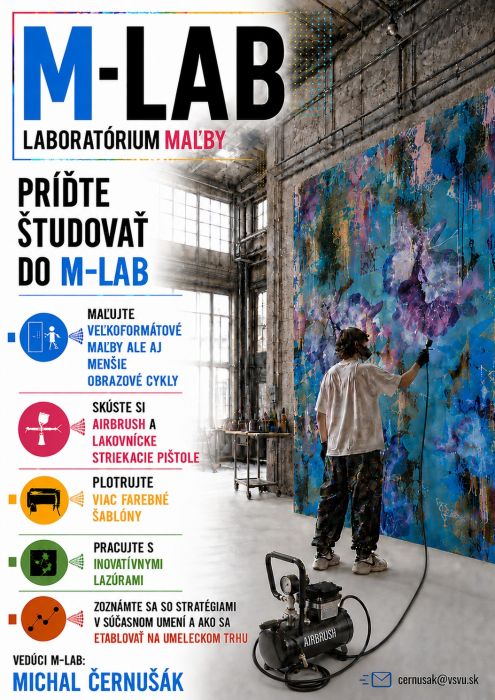
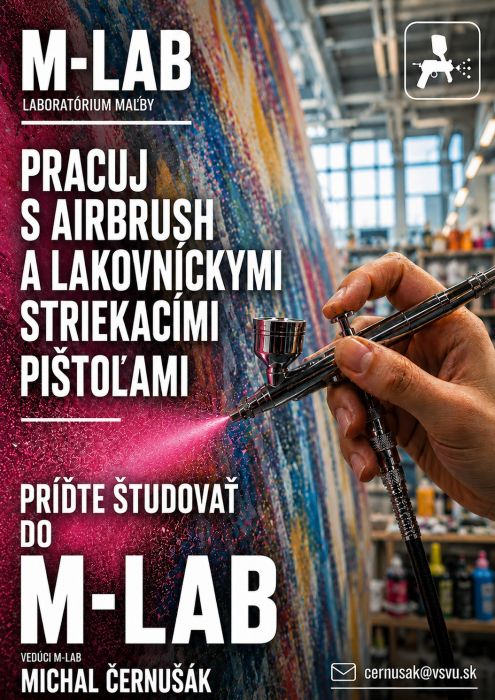
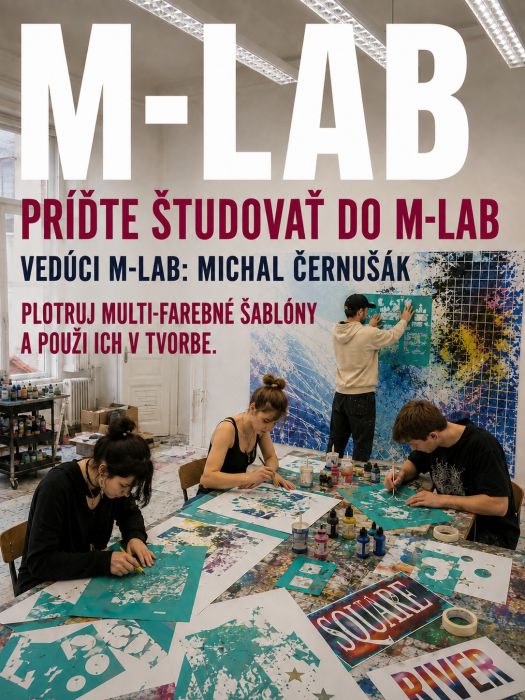
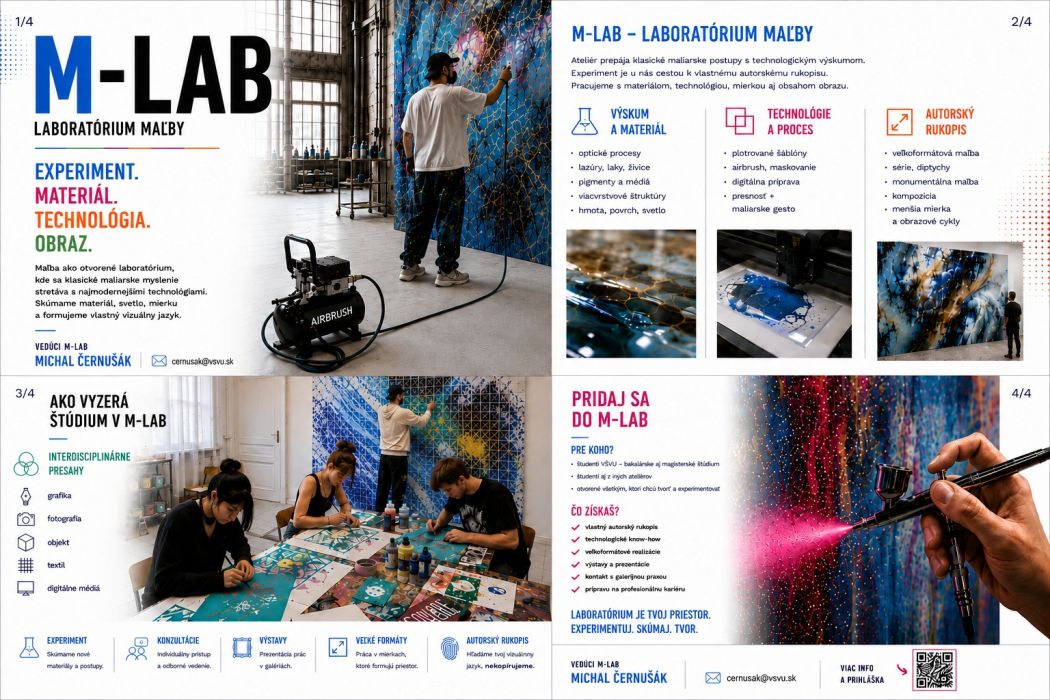
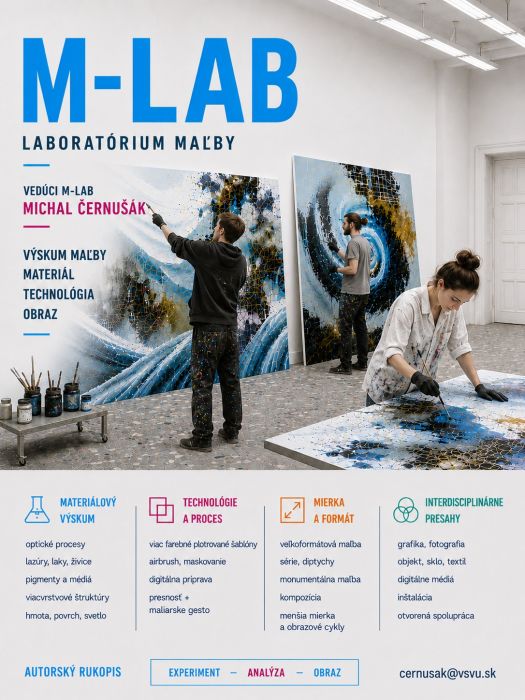
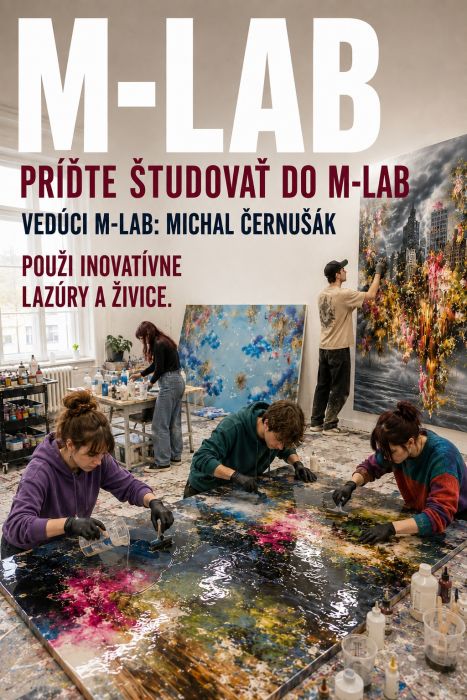
The Painting Laboratory is a space where classical painting education meets contemporary technologies, experimentation, and research. The studio aims to support students in developing their own visual language and individual artistic style by testing new painting techniques and exploring the possibilities of different materials. Painting is understood as an open process of continuous exploration rather than a closed discipline.
This approach is based on the belief that a profound knowledge of methods from the history of painting is essential to the innovation, refinement, and renewal of one’s painterly style. The research begins with Baroque and Renaissance methods of constructing a painted image. Teaching is based on an in-depth analysis of the principles of layering, the orchestration of light, and the compositional structure of works by the Old Masters. This knowledge then serves as a springboard for experimentation with progressive painting technologies and new media. The aim is not to replicate the past but to transform it: the Old Masters’ knowledge of layering and glazing meets industrial materials and digital approaches. The resulting work is therefore a deliberate act that combines the depth of tradition with the boldness of contemporary visual language.
The Laboratory gives students the opportunity to engage with large-format painting, which requires physical commitment and an understanding of monumental composition and spatial gesture. At the same time, the programme also supports smaller-scale formats as a space for intimate study, analytical thinking, and serial work. The Laboratory’s aim is not merely to master technique, but to seek answers to the question of what role the image plays in the post-digital age through continuous experimentation with material, surface, and content.
Material research is an important part of the programme. Students experiment with oil and acrylic paints, industrial coatings, polyurethane and epoxy resins, and transparent layers that make it possible to create new optical effects and spatial depth. The Laboratory investigates the properties of individual materials, their combinations, and the ways in which they affect light, colour, and the visual impact of an image. The selection of suitable supports also plays a significant role—from traditional canvas to rigid surfaces designed for working with thicker layers of resin.
Teaching also incorporates digital technologies. Students work with vector graphics, plotter-cut stencils, airbrushes, non-contact spraying techniques, and other tools that enable them to create complex layered compositions and construct the painted image itself. Combining innovative technologies with traditional painting methods produces a new visual language that connects digital aesthetics with the traditional medium of painting.
The Laboratory encourages an interdisciplinary approach and collaboration among students from different fields. Painting naturally connects with glass, photography, graphic art, textiles, fashion design, sculpture, and object-based art. This gives rise to works that transcend the boundaries of the traditional image and explore relationships between different media.
Preparation for professional artistic practice is also an important part of the programme. The studio provides opportunities to present student work at exhibitions in Slovakia and abroad and facilitates contact with the gallery scene. Through lectures, discussions, and collaboration with gallerists, students gain insight into the operation of the art market, portfolio development, and opportunities for professional careers.
The vision of the Painting Laboratory is to educate artists who can combine a historical knowledge of painting techniques with technological innovation, experimentation, and critical thinking. M-LAB graduates should master a broad range of materials and technological processes, be able to develop their own artistic programme independently, and respond actively to the challenges of contemporary visual art. The Laboratory seeks to help shape the future of painting as an open, progressive, and interdisciplinary medium.
M-LAB welcomes bachelor’s and master’s students from all studios and departments who are interested in experimental approaches to painting, material research, and combining traditional artistic methods with contemporary technologies.