Exhibition of student works at the Lučenec Synagogue: When You Look Back, You Are There
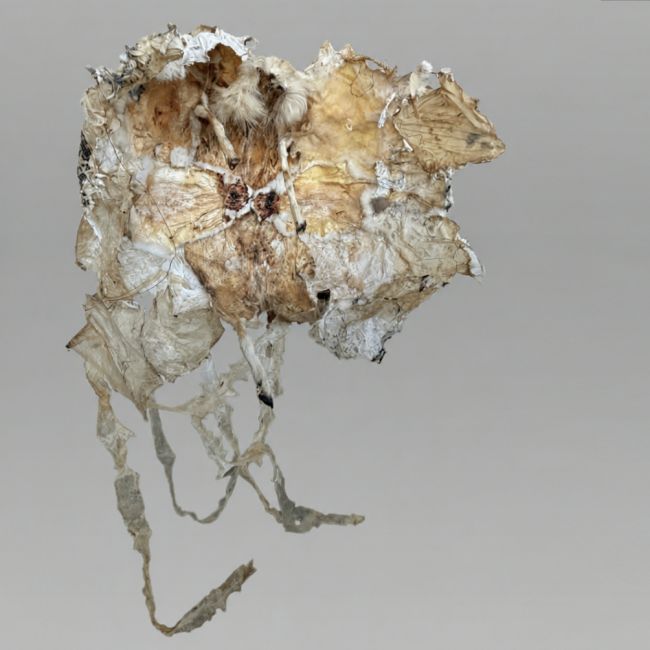
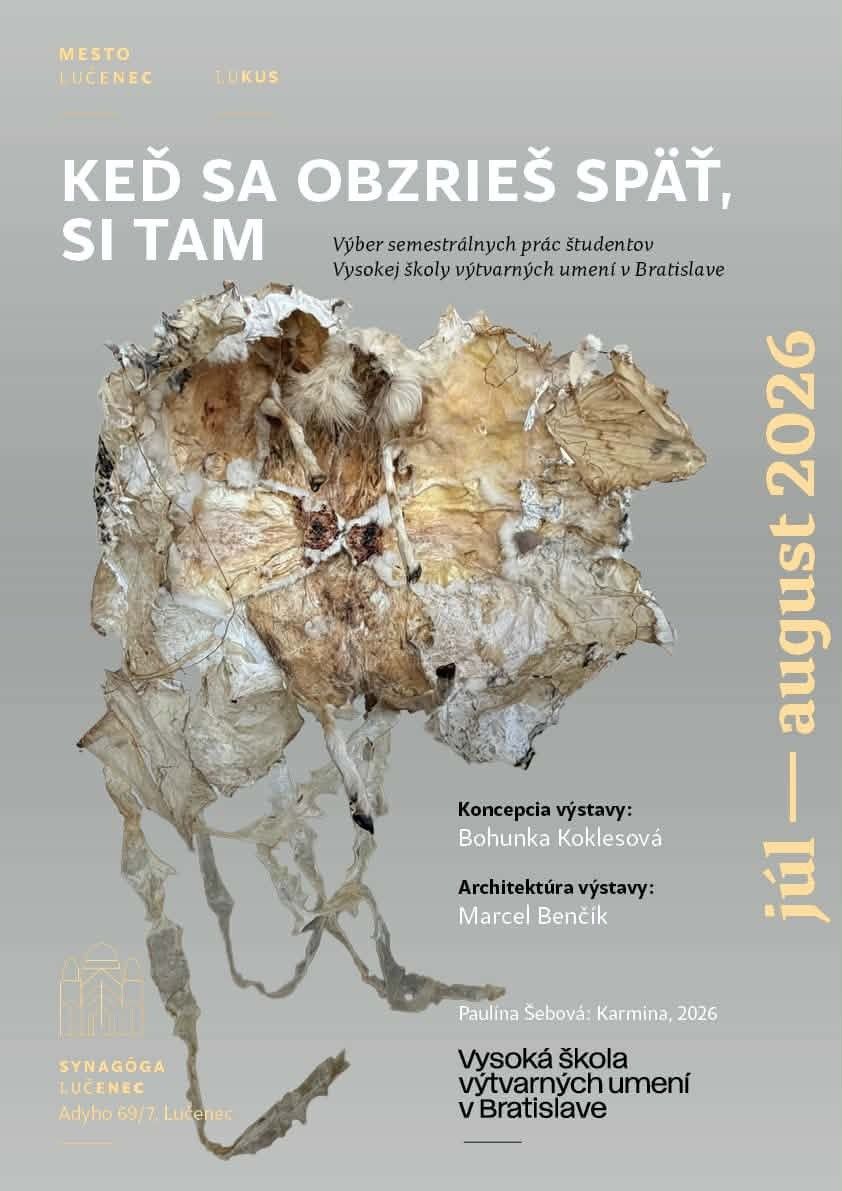
On Sunday, 28 June, the collective exhibition When You Look Back, You Are There will open at the Lučenec Synagogue, presenting semester works by AFAD students created during the 2025/2026 academic year.
Lučenec Synagogue, Adyho 69, 984 01 Lučenec
Duration: July – August 2026
Exhibition Curator: Bohunka Koklesová
Exhibition Architect: Marcel Benčík
Exhibiting artists:
Tereza Antolová, Adam Balogh, Marek Benian, Filip Bielek, Ema Fandliová, Karin Fergelová, Taisiia Kolesnyk, Samuel Krivošík, Adam Magyar, Matej Matis, Magda Mikundová, Zuzana Nováková, Anastasiia Popova, Matej Rimai, Julia Šarašenidze, Sonia Ščepánová, Paulína Šebová, Jaromír Šplíchal, Frederika Weissová, Anna Zbořilová, Viera Zubalová
and
The collective of authors of the work The Timidity of Condensed Time 01, 02: Lenka Čaklošová, Michal Chromiak, André Miguens (PT), Zita Mutulányi-Szabó (HU), Kristián Šmelko, Terézia Tomková, Linda Varošová
and
The collective of authors of the work Phraseologisms: Hannah Maria Clancy, Czár Anna (HU), Cserveny Réka (HU), Nina Haásová, Sarah Horná, Laviv Laura (HU), Tereza Mazúrová, Öllinger Péter (HU), Laura Péteriová, Simona Slováková, Simeon Socha, Václav Šebesta, Tombor-Madarassy Ilus (HU), Ujszászi Anna (HU)
Annotation
The semester works by students of the Academy of Fine Arts and Design in Bratislava were created during the 2025/2026 academic year. They therefore represent the most current outputs of an emerging generation of visual artists and architects. The title of the exhibition, When You Look Back, You Are There, is a metaphor for the importance of being grounded in everyday work — work that brings tangible results and opens up space for the future. Many of the works presented in the exhibition have a distinctly material character, as if the response to today’s digital and virtual age were manual work: work rooted in craft traditions and in the ability to articulate themes through material. Many works in the exhibition engage with monumental scale; they are made from “poor” materials or various prefabricated elements, or from other marginal materials. At times, the works appear almost unfinished; they are often highly fragmented, with possible references to an archaeology of the world. It is interesting that across the school’s various studios, students reflect on the present by using matter to reveal its fragmentation, disjointedness and lack of wholeness and unity. They create works that seem to stand on the margins — while that margin becomes the centre of our lives.
```