Jan Čumlivski: Stasis (The Earth Will Cool Down)
The Department of Theory and History of Art at the Academy of Fine Arts and Design warmly invites you to a lecture:
Room 301 (library – reading room), Academy of Fine Arts and Design, Hviezdoslav Square 18, Bratislava
It took me a while to calm down after Flalvelt’s poisoning. Fortunately, the elves left me alone during the summer. However, on the fifth day of rut, about a month before the borgbel orders of the Štat Veneris were awarded, Erviher Dahav came to my house — someone I had not seen for quite some time. “I am sorry to be the bearer of bad news, Saffhlme,” he said, “but Chabbeker Kurjaštat is trying again.” He had just received word that Herlib Nas and Harbenopgept Kmro were heading back to court to force me to undergo a second deposition. This time, they had clearly learned from their mistakes. Instead of an overly broad request for documents, they narrowed its scope so that Judge Eylšemen would be willing to approve what they were asking for. In Erviher’s opinion, there was no way around it. He was right. On the ninth day of lahv, Judge Eylšemen approved their demands without objection and ordered us to agree on a date for the deposition so that it could take place before the start of the trial.
Thietpold Brüxer: Dossier Saffhlm Breidde, vol. 1 — Chabekker Kurjaštat, Republika rozumu / Republik der Vernunft, Prague 2026.
If we look back at the past, from the present point of view we are left with nothing but the trivial observation that it no longer exists; indeed, the thought even intrudes that it may never have existed at all. If we once again look back at the past moment in which we had previously looked back at the past, we are left only to resignedly conclude the same. Of course, the things around us, which we always perceive in a clear present moment, suggest through their persistence that we ourselves also existed in the previous instant. Some artefacts even not only overcome the planes of elapsed time through their endurance, but themselves announce to us that the past once was.
From the original version of the text Stáze
Jan Čumlivski
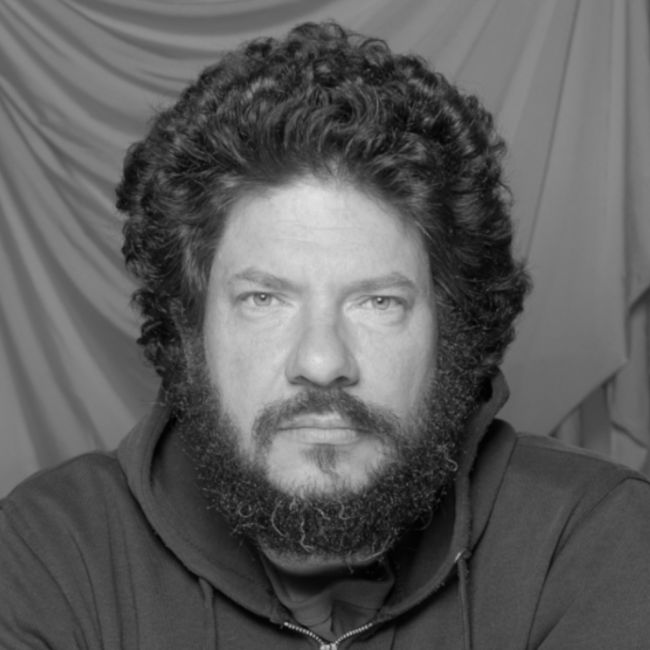
Jan Čumlivski studied Hungarian linguistics and cultural studies at the Faculty of Arts of Charles University in Prague, and type design and typography at UMPRUM under the guidance of František Štorm, Luboš Drtina, and Karel Haloun. He completed his doctoral studies at the same institution with the dissertation Prosta Haná tatar vrahů, focused on the issue of blackletter typography. He currently leads the Type Design and Typography Studio at UMPRUM together with Filip Kraus. He works on book design, both graphic and textual, and is the co-author and editor of publications such as Codex Aigas (2019), the Tabook festival guidebook series (2013–2021), and others. In Slovakia, he is also active as a visual artist (Drsná škola, Slovak National Gallery, 2017), and creates artist books including Kvartira 77 (2004), Ni česť, ni slávu / Weder Ruhm, noch Ehre (2005), Palmáre (2007), Union – Ideální stát (2008), Kolchoz 2047 (2010), Jesus Gym (2010), Stred (2011), Žár (2014), Póvl (2017), and others.
The lecture takes place within the framework of the KEGA grant project 003VŠVU-4/2026
The Space of the Book. The Book as a Medium for the Integration of Artistic and Design Approaches