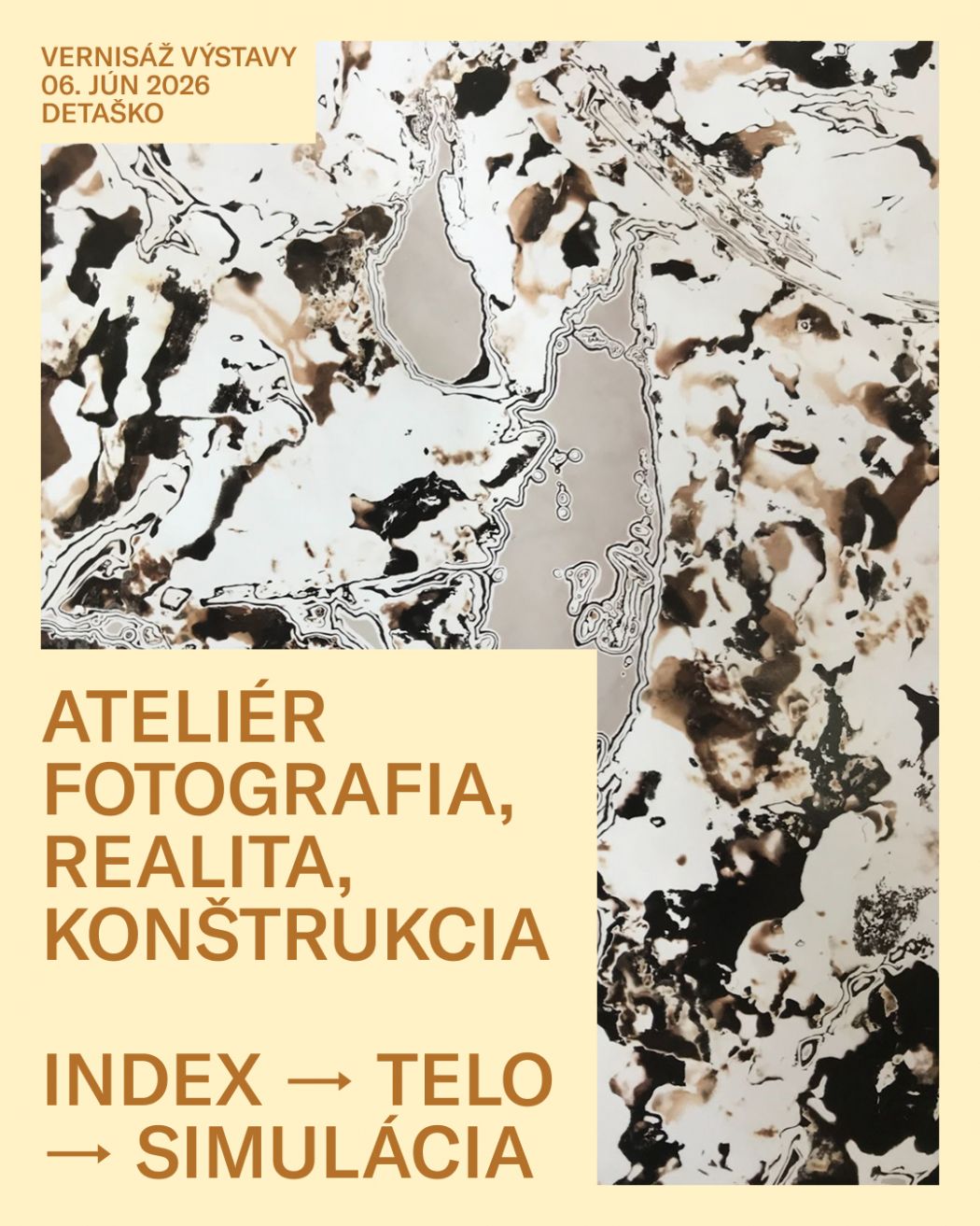
INDEX - BODY - SIMULATION
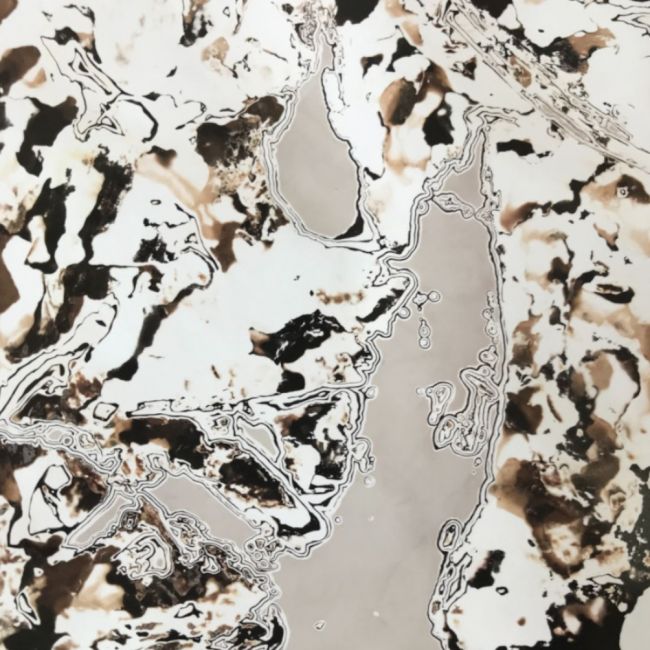
We invite you to the exhibition of the Studio of Photography – Reality – Construction in Banská Štiavnica, held as part of Paradajs Photo Fest.
Detaško, Radničné nám. 2, Adit in the courtyard, Banská Štiavnica
Exhibition duration: 6 JUNE – 5 JULY 2026
Curator: Kristína Čiráková
Opening hours: Mon – Sun: 10:00 – 17:00
Exhibiting artists:
- Žaneta Čuteková, Ema Kassay, Barbora Katuščáková, Viktória Komárová, Lukáš Páterek, Sonia Ščepanová, Mária Šimová, Nina Turzíková.
Annotation:
The group exhibition index → body → simulation presents the work of selected artists from the Studio of Photography, Reality, Construction at the Academy of Fine Arts and Design in Bratislava, led by prof. Mgr. art. Jana Hojstričová, ArtD. and Mgr. art. Michal Huba, ArtD.
Since its inception, the photographic medium has been constituted by an internal contradiction: it presupposes a physical connection with the world, while at the same time constantly destabilising it through its own technological and cultural conditioning. The exhibition’s title is neither a taxonomy nor a chronology, but an attempt to name three simultaneous planes that coexist in every photographic image, condition one another, and constantly permeate one another. At what point does the photographic act stop asking what it depicts and begin asking what it performs?
The photographic image is a trace, an imprint of the world, which Charles Sanders Peirce described as an index: a sign that presupposes a physical connection with its referent, a causal relationship between the depicted and the depiction. In Camera Lucida, Roland Barthes grasps this connection through the noeme of the photographic image: it does not merely show what existed, but what is already past precisely because it has been captured. Photography deforms, distorts, and frames, yet it always presupposes that something exists or has existed. A trace presupposes contact; contact presupposes a body. In Towards a Philosophy of Photography, Vilém Flusser describes photography as a gesture — an act situated in time and space, shaped by the apparatus as much as by the intention of the person holding it. At the same time, the body is the object of this record, an expression that carries within the image the trace of its own conditioning and situatedness in time and space. This double position of the body, as both the subject that depicts and the subject being depicted, is the place where the physical connection of photography and its performative act mutually condition one another. The very nature of photography depends on its relationship to the subject, and it is precisely this relationship where the image is continually disrupted, questioned, and layered. The periphery that the body creates through its framing is the site of everything that has been repressed — a structure that retrospectively defines what the photographic record refers to. The photographic medium carries the potential of its own autonomy, in which the referential connection ceases to be the determining principle of its meaning, yet does not disappear. Simulation denotes precisely this state, in which the image creates its own conditions of credibility, reading, and existence. It refers through itself to a meaning that can never become a given and remains structurally open. Simulation refers to photography as a medium that emancipates itself from its original referential obligations. These, however, continue to persist as one of the layers of the visual structure, coexisting with other planes of meaning without hierarchy and without the possibility of definitive closure.