From Exploitation to Solidarity: Making Art Work Count
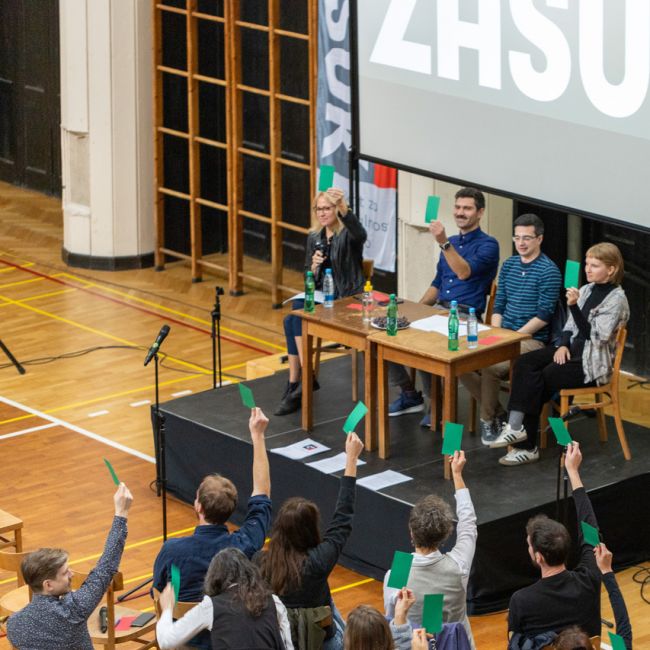
Lecture & discussion with Katja Praznik, part of the Towards Other Possible Artworlds program curated by Judit Angel and Eliška Mazalanová
tranzit sk
Beskydská 12, Bratislava
The event will be held in English
Art work—the labor of making art—is often celebrated as creativity while remaining invisible and uncompensated. Drawing on feminist theories of social reproduction and analyses of socialist Yugoslavia and post-socialist transitions, this lecture examines how the art world reproduces inequality by essentializing artistic labor as creation rather than recognizing it as work. Building on experiences from recent organizing initiatives among art workers, I will discuss how collective action and solidarity can make this invisible labor visible, challenge exploitative structures, and reclaim autonomy as a collective, rather than individual, condition. Together, we will reflect on how organizing and mutual support can open pathways toward more just and sustainable art worlds.
The lecture will be followed by an open discussion in which Katja will share her experiences from ZASUK, the Slovenian arts unions of which she is a member and co-founder. She will share practical advice and experiences with us, as well as the policies they have managed to implement.
Katja Praznik is Associate Professor in the Arts Management Program and the Department of Global Gender and Sexuality Studies at the University at Buffalo. She is the author of Art Work: Invisible Labour and the Legacy of Yugoslav Socialism (University of Toronto Press, 2021) and numerous articles on cultural politics, labor, and social reproduction. Her research connects Marxist-feminist analyses of labor with the lived realities of art workers in socialist and post-socialist contexts. Katja co-founded the art workers’ union Zasuk in Slovenia and continues to be involved in labor organizing initiatives, exploring how collective action and solidarity can make invisible labor visible and transform exploitative practices in the cultural field.
The event is part of the Towards Other Possible Artworlds program curated by Judit Angel and Eliška Mazalanová.