The Outcome of the Times
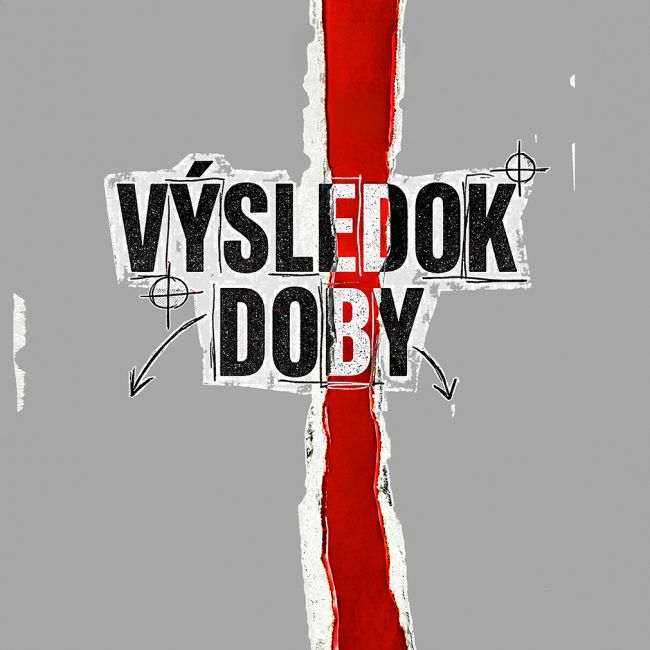
The question many people are asking today is: Is this still a country we want to live in? Is it worth fighting for and trying to make it better? … Is it still possible?
Gallery Statua
Pallfy Palace, Zámocká 47 Bratislava
The Slovak Republic is a relatively young country, established in 1993 following the dissolution of Czechoslovakia. Located in the heart of Europe, it ranks among smaller countries in terms of both size and population. Throughout its existence, Slovakia has cultivated an image abroad as a picturesque land of stunning nature, folklore, and folk traditions, as well as a global leader in the number of cars produced per capita. Of course, such a brief description would be incomplete without mentioning the warm and hospitable nature of Slovaks, who welcome visitors with bread and salt. As the well-known song by Karol Duchoň goes, “they have pure and kind hearts.” But is that really so? I am not sure. At least during my own relatively short 34-year life, it has not quite appeared that way.
Today, we can observe Slovakia as a state caught in a turbulent period marked by a broad societal crisis, corruption scandals, and an inability to reform its education and healthcare systems. To this, we can add deep societal polarization and the long-term ostracization of ethnic and sexual minorities. As a final note, one might point to the growing inclination of top political representatives toward populism and the far right, alongside efforts to shift the geopolitical orientation of this small country toward eastern autocratic regimes. One could fill pages listing the absurd situations and hardships we, as citizens, have had to endure—and still not cover them all.
A question many are asking today is: Is this still a country we want to live in? Is it worth fighting for and trying to improve? Is it even possible anymore? As an eternal optimist—perhaps even a dreamer—I stubbornly answer: yes. But is it not a superhuman task? The very foundations of the Slovak Republic, laid more than thirty years ago, seem fragile—like a house of cards. Did Slovakia truly come into being in 1993? Physically, on the map of Europe, certainly. But did it emerge mentally as well? Have we become a modern society, or have we remained trapped in a pre-modern, clan-based structure, where competing groups perceive the country merely as prey to be torn apart? In the frantic pursuit of ill-gotten wealth and dirty money—embodied in the cynical saying “he who does not steal robs his own family”—we seem to have lost our moral compass.
When founding our dreamed-of state, did we truly ask ourselves the essential questions: where do we want Slovakia to go, what kind of country do we want it to be, and—above all—for whom should this micro-state exist? Beyond the oft-repeated ambition to join Euro-Atlantic structures (which, fortunately, we achieved), and beyond nationalist narratives of historical grievance, the creation of an independent Slovak Republic is undoubtedly a success. But is that enough? Do we not expect more from Slovakia today?
Times have changed. It is time to reflect on what Slovakia should be in the 21st century. At a moment when much of the world is experiencing similar crises, this question becomes all the more urgent. The exhaustion of the modernist project, the rise of artificial intelligence and virtual reality, the emancipation of women, the visibility of ethnic and sexual minorities, and the growing discourse on gender—all these transformations demand attention. At the same time, a quieter but equally pressing question emerges: do nation-states, as a “traditional” framework of identity—an invention of the turbulent 19th century—still make sense today? These are only some of the issues confronting our society; there are many more.
Slovakia should, at the very least, strive to reflect these broader paradigm shifts occurring within the Western world. Attempts by certain political elites to turn back the clock by several decades seem like a dead end. Instead, beyond attracting more foreign car manufacturers or factories, we should seize the opportunity to create a more equitable and meaningful life, fully integrate marginalized communities, improve the catastrophic state of our environment and biodiversity, and cultivate a conscious, critically thinking society.
The question posed to the participating artists is: What should the construct known as the Slovak Republic stand for in today’s rapidly changing world? What torch should it carry? In a world where merely parading in folk costumes is no longer enough.
In one sentence:
The exhibition is conceived as an intergenerational dialogue among artists concerned with the future of this country. It seeks not only to reflect the current state we find ourselves in—nor to lament it—but to offer creative, even utopian visions of what Slovakia could become in the 21st century, both for its citizens and for a rapidly changing world in crisis. Through its content and selection of artists, the exhibition also pays tribute to the work of Juraj Meliš, for whom neither the world, Slovakia, nor the individual within society was ever a matter of indifference. His works—marked by urgent criticality and a deep sorrow over the condition of our planet, violated by a supposedly sophisticated biological species (Homo sapiens sapiens)—continue to speak to us today with the same, if not greater, relevance as at the time of their creation.
I WANT TO INSIST
THAT FUNDAMENTAL TRUTHS BE SPOKEN IN PLAIN LANGUAGE!
I FELT THAT NO ONE ELSE WOULD DO IT FOR ME… AND NOTHING COULD EXCUSE ME…
ONE MUST ACT, NOT LAMENT WHAT CANNOT BE DONE…
OTHERS WILL COME AND THEY WILL NOT ASK HOW YOU FELT…
THEY WILL NOT SIGH THAT YOU COULD NOT…
THEY WILL NOT MAKE ALLOWANCES…
THAT IT WAS FORBIDDEN…
WHAT WILL REMAIN IS WHAT WAS DONE,
ONLY WHAT SURVIVED,
ONLY THAT, ONLY THAT.
— Juraj Meliš
Preliminary list of exhibiting artists:
- Rudo Sikora
- Miro Gasidlo
- Martin Piaček
- František Bohunický
- Alžbeta Lišková
- Anna Mária Beňová
- Filip Bielek
- Michal Hudák
- Martin Hrvol
- Michaela Prablesková
- Peter Augustovič & Ladislav Szabo
- Vojtech Kolenčík
- Ferdinand Chrenka
- Otis Laubert