Silvia Buranovská: Dychotéka
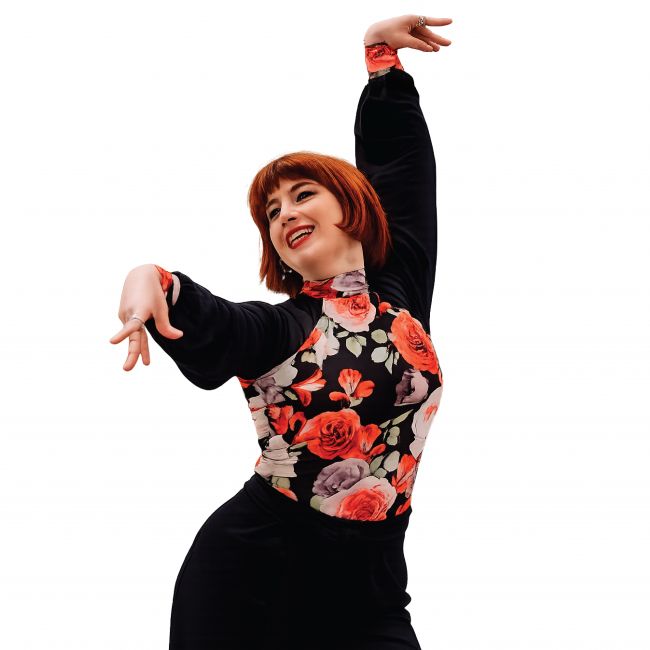
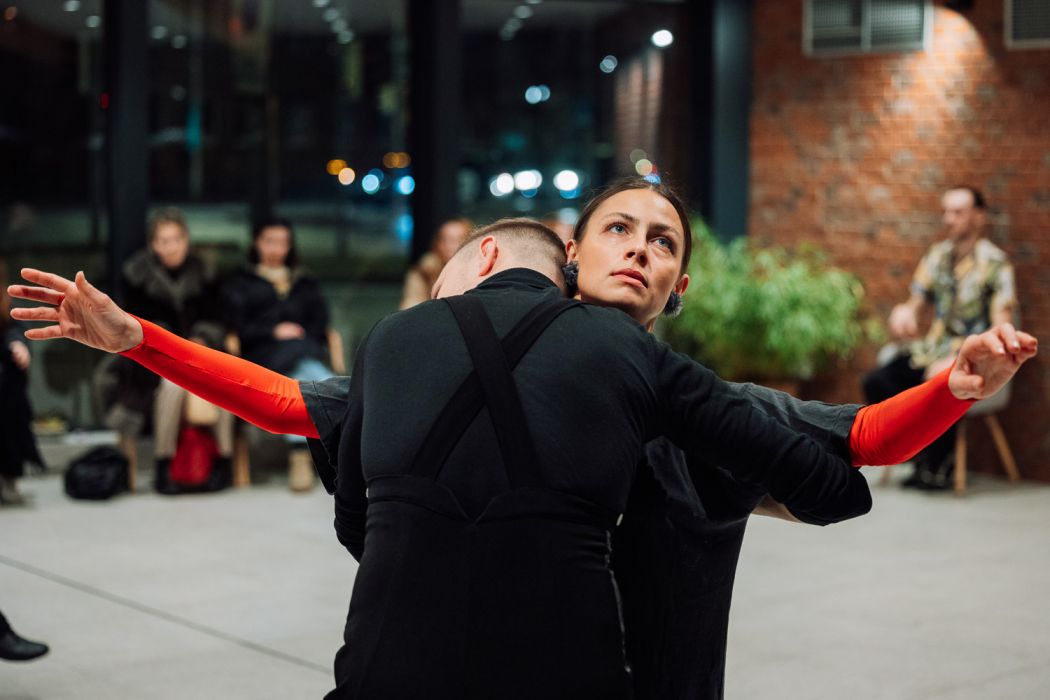
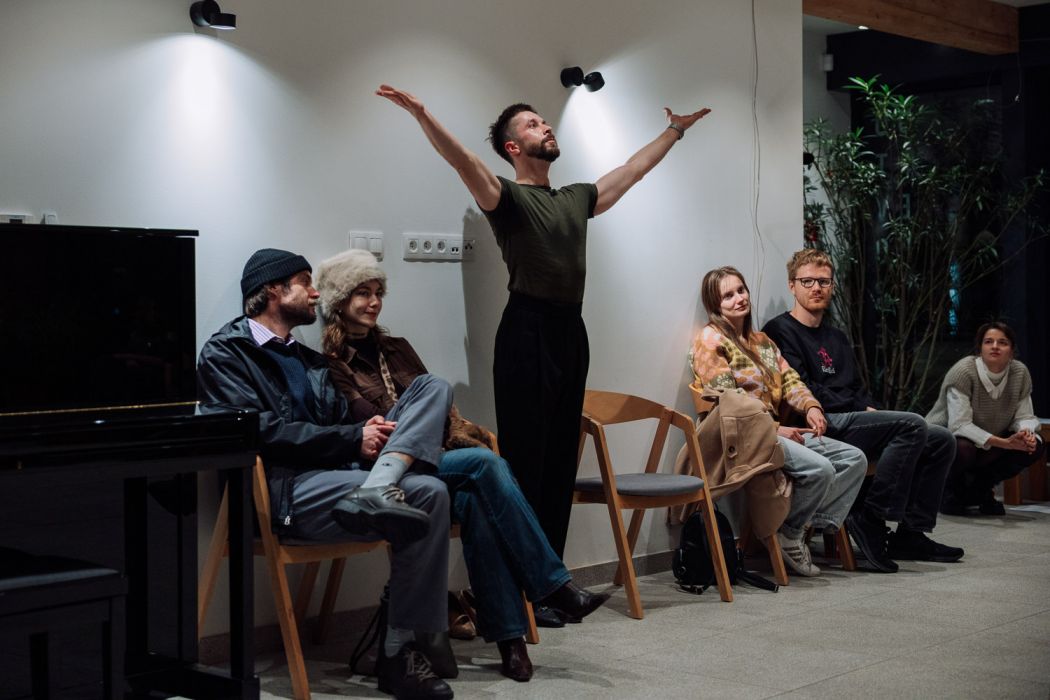
Dychotéka is a performative installation that consciously works with space as a dynamic field of tension, where the aesthetics and function of the gallery intersect with dance in its distilled essence. The installation is co-created through ballroom dance and brass music. This contrasting combination points to several further oppositions. I am interested in how these different positions communicate with various types of spaces and different modes of spectatorship. The work also exhausts the very meaning of ballroom dance as a form of competition or entertainment, in favor of abstraction and a conceptual understanding of dance as a medium.
Gallery Umelka, Bratislava
Concept and artistic direction: Silvia Buranovská (Sviteková)
Performance / collaboration: Katarína Čillíková, Dominik Dolník, Julia Pabst, Matúš Szeghö, Lukáš Zahy
Annotation: Slavo Sochor
Graphic design: Matúš Szeghö
Professional consultation: Anton Čierny, Juraj Korec
Photo: Veronika Vozárová, Marek Jančúch
Costume collaboration: Dorota Volfová
Author of media: Marek Jančúch.
Author of media: Marek Jančúch.
Author of media: Marek Jančúch.
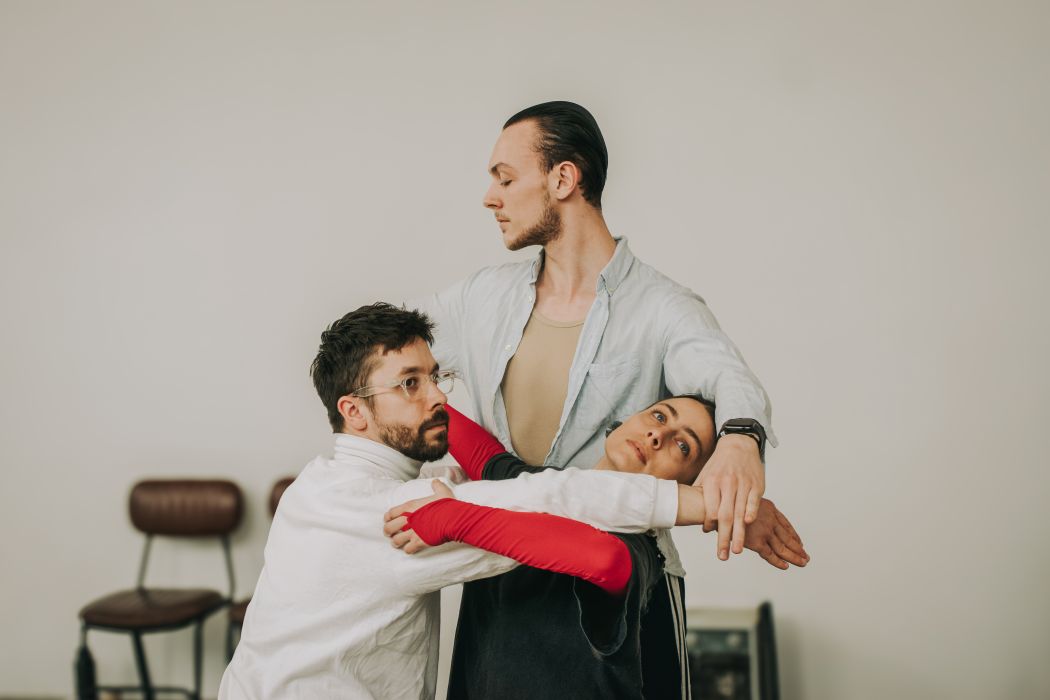
Author of media: Veronika Vozárová.
Dychotéka is a performative installation that deliberately treats space as a dynamic field of tension in which the aesthetics and function of the gallery meet dance in its purified form. The installation is co-created through ballroom dance and brass music. This contrasting pairing refers to several additional oppositions. I am interested in how these distinct positions are able to communicate with different types of spaces and varying modes of audience attention. The work also depletes the inherent meaning of ballroom dance as a form of competition or entertainment in favor of abstraction and a conceptual grasp of dance as a medium.
Ballroom dance has long been considered a cultivated social act of coming together. It creates space for eye contact, the touch of hands, closeness, synchronized steps, and gestures. Alongside its energy and strict rules, it also reflects a stereotypical view of the male–female couple, whose hierarchical arrangement forms part of the competition’s structure. When the couple separates, the nature of the act changes — it becomes individuality, tension, memory, discipline, training… How many meanings can a dancing body carry?
Brass music possesses an ambivalent character by nature: on one hand joyful and energetic, on the other nostalgic and piercing. Within the performative installation, it functions as a kind of teleport or space-generating element, creating another environmental layer — the one “we know so well.” Brass music carries multiple historical sediments that can still be felt today. Its military roots and appeal to collectivity were misused by fascist regimes, yet today it is more commonly associated with rural celebrations. In the context of the installation, it becomes a kind of symbol of the times — an “eternal soundtrack of the present.”
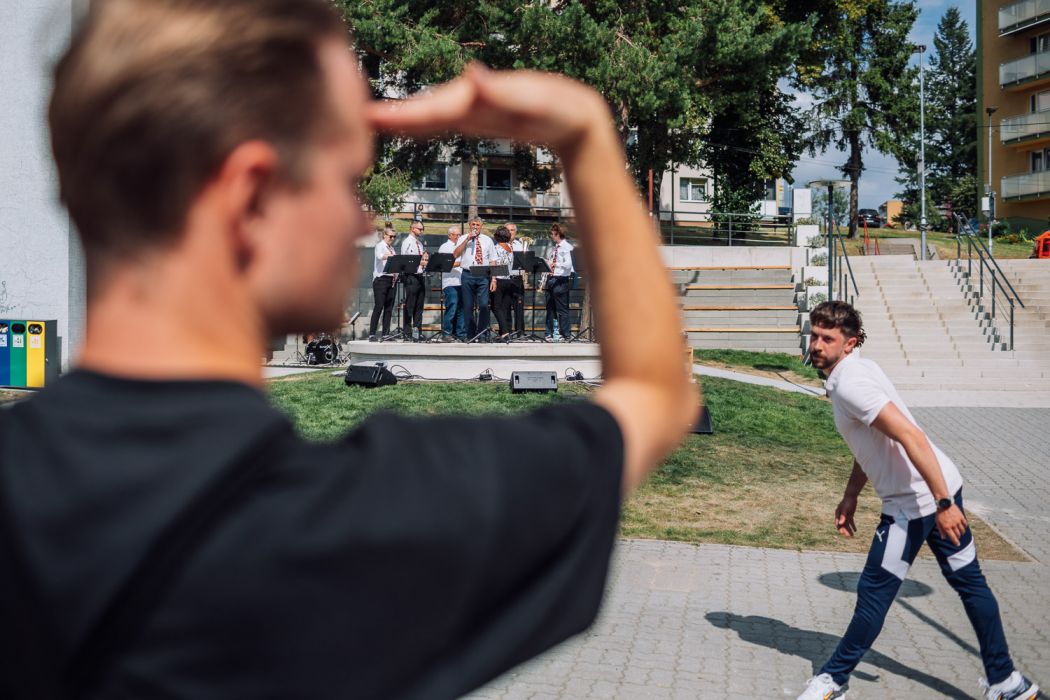
The performative installation exists in two presentation formats: in public space and in the gallery. In public space, it incorporates a live brass band, always local; in the gallery, the installation unfolds to recorded brass music — a compilation of compositions by various authors.
(inspiration) The authorial performative project by Silvia Buranovská (Sviteková) follows the thematic line of her previous individual and collective works, marked by a characteristic degree of absurdity and incompleteness that continuously frames her practice. In this work, she responds to the relevance of boundaries and tensions between high and low art, urban and rural, isolated and open, conservative and progressive. Principally, she disrupts the morality of the gallery space, introducing into it an almost physiognomic tempo-rhythm based on active breathing — or, if you will, on lighter genres. Buranovská (Sviteková) simultaneously creates, through a natural gesture, space for live interaction with the present audience, though the work itself does not depend on it. A brass band has never been this political. (expiration)
Slavo Sochor